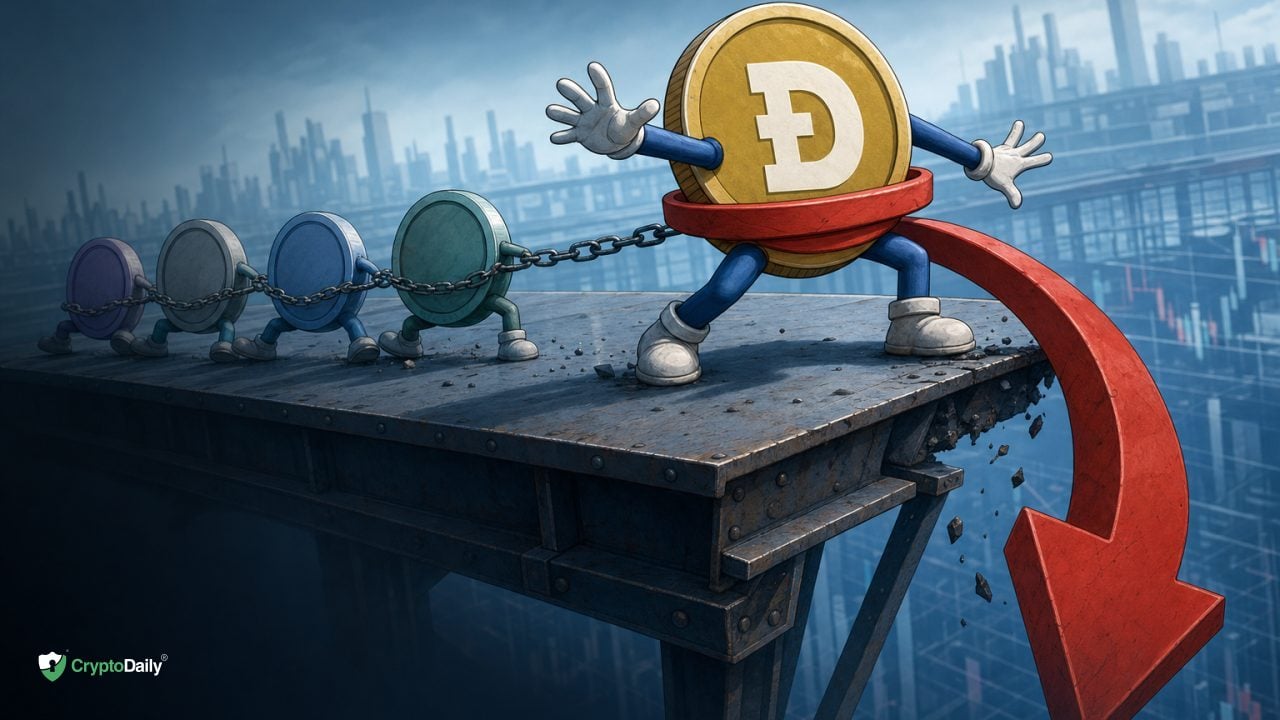
Memecoins may feel like pure fun, but when Dogecoin leads the market lower, it often hints at deeper shifts in risk appetite. This piece examines what DOGE weakness says about altcoin risk, which indicators matter, and how to respond pragmatically.
You’ll learn why memecoins still set the tone for speculative flows, how derivatives and liquidity react when the music stops, and which signals help separate a sharp flush from a true regime change.
Quick Answer
Editor's note: Negative funding and a quick bleed in open interest on DOGE/SHIB were followed by wider spread expansion across mid-cap L1s within 24–72 hours. Even when Bitcoin held firm, alt breadth failed without stablecoin inflows. That pattern didn’t always lead to full drawdowns, but ignoring it made exits more expensive and hedges harder to size. — Karim Daniels
When Dogecoin leads losses, it usually reflects fading risk appetite, thinner liquidity, and de-leveraging at the speculative edge of crypto. Because memecoins sit at the frontier of retail participation and perpetuals activity, their weakness can precede or accompany broader altcoin drawdowns. Watch funding, market breadth, and stablecoin flows to gauge whether the move is a blip or a regime shift.
- Memecoin selloffs often coincide with negative funding and falling open interest.
- Altcoin breadth weakens as capital rotates to Bitcoin/ETH or sidelines in stablecoins.
- Liquidity depth thins first on smaller pairs, widening spreads and slippage.
- Rebounds without breadth or stablecoin inflows tend to fade quickly.
Why does Dogecoin still move the altcoin risk dial?
Dogecoin remains one of the largest and most liquid non-Bitcoin, non-Ethereum assets by market capitalization, with deep spot and perpetuals markets across major exchanges. Its visibility and accessibility make it a convenient proxy for retail risk-taking. That breadth means DOGE price action frequently captures the marginal shift in appetite before it shows up across smaller caps. For context, see Dogecoin’s profile on CoinMarketCap, where it typically ranks among the largest altcoins.
Memecoins are narrative-heavy and valuation-light. They depend less on cash flows or protocol fees and more on momentum, attention, and a steady stream of new participants. When that attention wanes or liquidity providers pull back, prices can reprice quickly. The same dynamics that turbocharge rallies can accelerate drawdowns.
Because DOGE lives at the intersection of retail flows and derivatives leverage, it reacts fast to changes in funding conditions. As speculative longs unwind, the selling pressure can ripple outward as market makers widen spreads and liquidity thins on other high-beta tokens. That is one reason memecoin weakness still matters for anyone holding smaller L1s, DeFi tokens, or newer thematic bets.
Pro tip: Treat DOGE as a heartbeat for speculative participation. If it’s dropping on rising volume while spreads widen across alt pairs, assume liquidity conditions are deteriorating elsewhere too.
What do derivatives and order flow reveal when memecoins wobble?
Derivatives data adds essential color. When DOGE leads a selloff, funding rates often flip negative across memecoins and high-beta alts, while open interest contracts as positions are closed or liquidated. Monitoring aggregated metrics on platforms like CoinGlass helps confirm whether the move is leverage-driven or spot-led.
Spot-liquidity quality is equally important. During risk-off stretches, depth at 1%–2% from mid-price typically shrinks and quoted spreads widen. That raises slippage, especially on smaller pairs, forcing forced sellers to accept worse execution and amplifying downside. Market structure research providers such as Kaiko regularly contextualize liquidity shifts that accompany volatility.
If the stress is primarily in derivatives, you’ll often see rapid funding resets and cascading liquidations that burn out within hours or a few sessions. If the stress migrates to spot—reflected in sustained net selling and persistent depth deterioration—the weakness can linger, drawing in broader alt sectors.
How does memecoin beta stack up against Layer-1, DeFi, and AI tokens?
Memecoins generally exhibit higher short-term beta and narrative sensitivity than most Layer-1s or cash-flow-linked DeFi tokens. They move further and faster on shifts in sentiment, which makes them useful but hazardous leading indicators. The table below outlines qualitative differences that matter when DOGE turns lower.
Sector Liquidity depth Narrative sensitivity Typical volatility Common catalysts Risk when memecoins sell off DOGE / top memecoins High on majors, uneven elsewhere Very high (attention-driven) Very high Exchange flows, social momentum Leads downside; liquidity gaps widen Layer-1 majors (ex-BTC/ETH) Moderate to high Medium to high (tech + cycles) High Roadmaps, ecosystem traction Follow-through selling after memecoins DeFi governance tokens Moderate Medium (fee/yield narratives) Medium to high Revenue, tokenomics, upgrades Liquidity thins; spreads widen AI/infrastructure themes Uneven; often thinner High (macro+tech headlines) High Partnerships, LLM/compute tie-ins Correlation rises in stress
In practice, when DOGE drops hard, L1s and thematic sectors may show delayed but correlated weakness. DeFi and tokens with clearer cash flow linkages can be more resilient, but in acute de-risking, correlation typically rises across the board.
Can weakness in DOGE foreshadow broader altcoin drawdowns?
Not always—but often enough to watch closely. When DOGE sells off with rising volume, negative funding, and shrinking spot depth, the conditions are ripe for broader risk-off across alts. Confirmations include falling market breadth (fewer alts up on green days) and rotation toward Bitcoin or stablecoins.
Global market metrics help. The total crypto market cap ex-BTC/ETH and Bitcoin dominance from CoinMarketCap Global Charts offer a quick pulse: rising dominance while DOGE slides suggests capital consolidation. Meanwhile, stablecoin supply and net issuance tracked by DefiLlama can indicate whether fresh dry powder is entering or if investors are retreating to the sidelines.
Historically, near local tops, the most speculative corners—memecoins and thinly traded microcaps—tend to peak first as incremental buyers dry up. Conversely, at durable lows, you’ll often see stabilization in DOGE and fellow memecoins alongside increasing stablecoin liquidity and improving breadth before stronger sectors break out.
Which indicators separate a sharp flush from a regime shift?
Short-lived flushes and full regime shifts can look similar at first glance. The difference shows up in how funding, breadth, and liquidity behave after the initial hit. Use this quick checklist to frame the risk.
- Funding resets: If funding normalizes quickly without persistent negative prints, the move might be a leverage washout rather than sustained risk-off.
- Open interest and basis: Stabilizing OI and a recovering futures basis suggest risk appetite returns; ongoing OI bleed points to de-risking.
- Spot depth and spreads: Rebuilt depth at 1%–2% from mid and narrower spreads imply market makers are redeploying capital.
- Market breadth: Improving breadth (more alts making higher lows) argues for a bear-trap s…