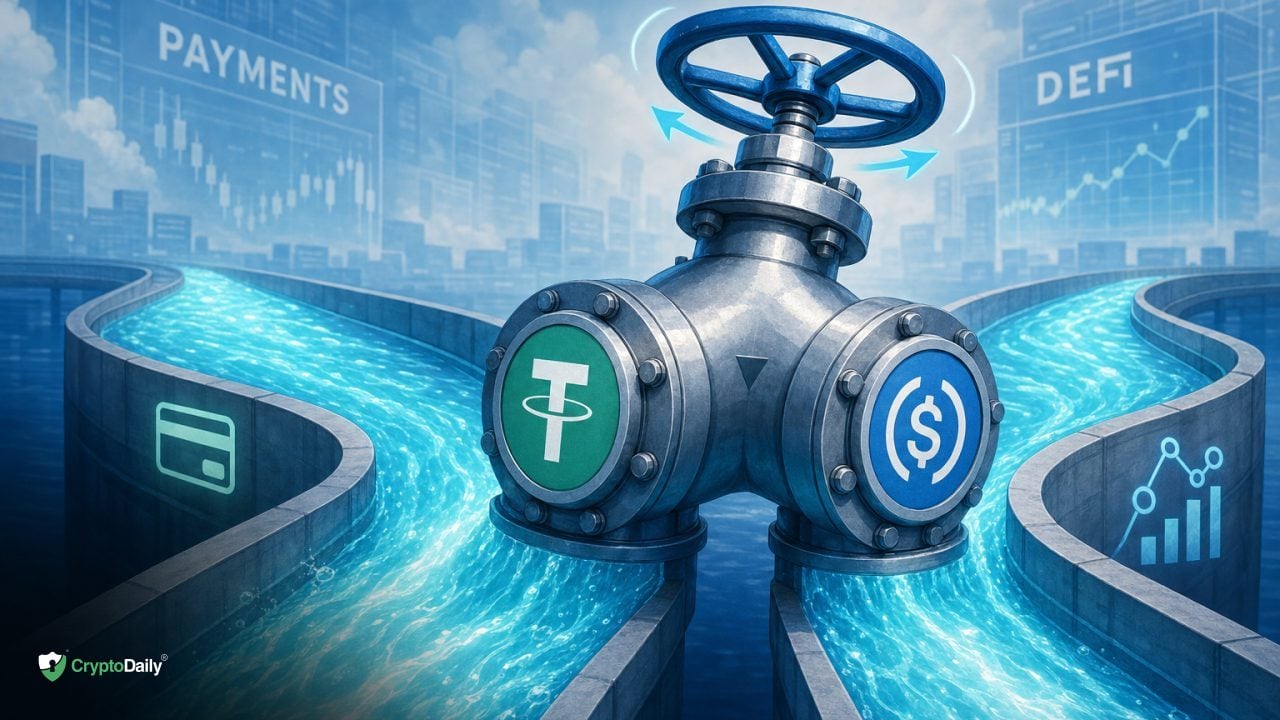
You can feel it on-chain. Stablecoins aren’t one big pool anymore. They’re splitting into two clear jobs.
USDT is becoming the everyday money rail for cross-border payments and P2P commerce, especially where banking is expensive or unreliable. USDC is increasingly the pipe that DeFi runs on across Ethereum and the newer L2s. Same dollar intent, different routes, different frictions.
If you’re building, trading, or paying salaries, this split changes how you move money, where you source liquidity, and which risks you accept.
Point Details USDT leads in payments Low fees and wide P2P access on Tron pull remittances and merchant flows into USDT. Tether’s transparency shows most USDT supply lives on Tron. USDC anchors DeFi Major DeFi pairs, collateral standards, and L2 ecosystems lean USDC first, especially on Ethereum, Arbitrum, Optimism, and Base. Two liquidity pools Payments liquidity clusters on Tron in USDT. DeFi liquidity clusters on EVM L1s and L2s in USDC. Bridging between them adds cost and risk. Operational choice matters Match coin to use case. Merchants keep USDT float for working capital. DeFi users hold more USDC for pools and collateral. Regulatory trade-offs Both issuers can freeze addresses. Compliance expectations and chain selection affect censorship and counterparty risk. Routes beat ideology Fastest path often mixes CEX and on-chain hops. Optimize for fees, confirmation times, and exchange liquidity, not brand loyalty.
Two stablecoins, two jobs
Let’s say you need to pay a contractor in Nairobi in two minutes with predictable fees. USDT on Tron usually wins. The fees are tiny, the P2P networks are deep, and practically every crypto-savvy small business knows how to accept it.
Now flip the situation. You’re providing liquidity on a DEX, posting margin, or farming points on an Ethereum L2. You’ll see more USDC base pairs, better routing in aggregators, and healthier money markets denominated in USDC.
Those are different jobs. One favors reach and cost. The other favors composability and protocol support. The market is just following the path of least resistance.
Why USDT keeps winning payments
Tron rails changed the math
It isn’t a state secret. A large share of USDT supply sits on Tron, which offers quick settlement and low fees. You can verify current chain splits on Tether’s transparency dashboard any time you want.
Tether shows where USDT lives by chain. That footprint directly maps to how people use it in the wild, because users gravitate to the cheapest workable rail.
P2P and remittance gravity
In regions where formal banking is pricey or slow, on-ramp and P2P communities have built real USDT liquidity. Multiple independent reports have tracked this trend, with USDT on Tron showing up heavily in emerging market flows and informal commerce.
Chainalysis has repeatedly highlighted the role of USDT in cross-border use cases and in countries where capital controls or inflation push people to stablecoins. See their regional breakdowns for context on adoption patterns and rails. Chainalysis
Merchants care about settlement, not brands
Ask a merchant what matters. It’s speed, fees, and whether their suppliers accept the same thing. USDT’s network effects on Tron check those boxes. The brand is secondary to getting paid without friction.
Strong network effects beat marginally better mechanics. If your buyer and your cash-out desk both prefer USDT on Tron, that’s the path you’ll take.
Why USDC powers DeFi
Protocol preference is real
DeFi protocols often treat USDC as the cleanest base asset for collateral, LP pairs, and pricing oracles. On Ethereum and major L2s, USDC is usually the default quote currency. It’s not universal, but if you sample DEX top pairs and lending markets, you’ll see it.
Data platforms help you check this. DeFiLlama’s stablecoin and chain dashboards show how liquidity clusters by asset and chain. The picture is consistent: Ethereum and L2 DeFi lean USDC. DeFiLlama
Issuer positioning and integrations
Circle has emphasized regulatory alignment and direct integrations with banks and fintechs, and USDC is tightly integrated into EVM tooling and custodians. Documentation and compliance posture matter to protocols and institutions alike. Circle
The L2 effect
On Base, Optimism, Arbitrum, and other rollups, core liquidity and incentives often start in USDC pairs. That snowballs into better aggregator routing and deeper money markets where yields are calculated in USDC terms. Traders go where the spreads and borrow rates make sense. Builders go where the integrations are smooth.
Two liquidity pools, not one
From a routing perspective, we have two hubs:
- Payments hub: USDT on Tron, plus pockets on BNB Chain and others.
- DeFi hub: USDC on Ethereum mainnet and L2s.
Money constantly jumps between them, but the cheapest path isn’t always a bridge. Frequently it’s CEX in the middle. Here’s a simple example.
- Receive USDT on Tron from a client.
- Deposit to an exchange that has deep USDT and USDC books.
- Convert to USDC.
- Withdraw native USDC to the L2 where your DeFi position lives.
This route avoids smart contract bridge risk and can be faster than hopping across multiple chains on-chain. Fees can still bite if you do this daily, so it’s worth negotiating exchange tiers or batching withdrawals where practical.
Pro tip: When bridging is unavoidable, favor canonical bridges endorsed by the chain or issuer, check recent audits, and start with a tiny test transfer. A failed bridge hop ruins your day a lot faster than a slightly higher CEX fee.
What to hold and where
Working capital for businesses
- If you primarily pay vendors or staff across borders, keep a USDT buffer on Tron. Match working capital to your outgoing rail.
- Keep some USDC on your DeFi chains for yield, hedging, or instant swaps into ETH when needed.
- Document a conversion playbook. Who approves swaps between USDT and USDC, on which venues, and with what limits.
For DeFi users
- Hold more USDC for base pairs and lending. Many vaults and LP strategies report in USDC and expect it for deposits.
- Still keep a small USDT stack for opportunistic CEX routes, OTC deals, or payments. Flexibility reduces slippage and time cost.
- Map your exit routes. If you need to redeem into fiat, check which asset and chain your off-ramp prefers.
For builders and treasuries
- Quote in the currency your users actually use. If your audience is LATAM merchants, USDT on Tron first. If you’re a perp DEX, USDC first.
- Design for dual rails. Add clear toggles for chain and stable choice at checkout, and precompute fee estimates before the user confirms.
- Automate rebalancing between USDT and USDC with thresholds, not vibes. Reduce human error and weekend liquidity scrambles.
Risk checklist before you choose
Depeg memories aren’t ancient history
Every stablecoin has had stress moments. USDC traded below par during the 2023 Silicon Valley Bank incident before recovering after issuer updates clarified reserve exposure and backstops. Circle’s own communications document that period and the subsequent normalization.