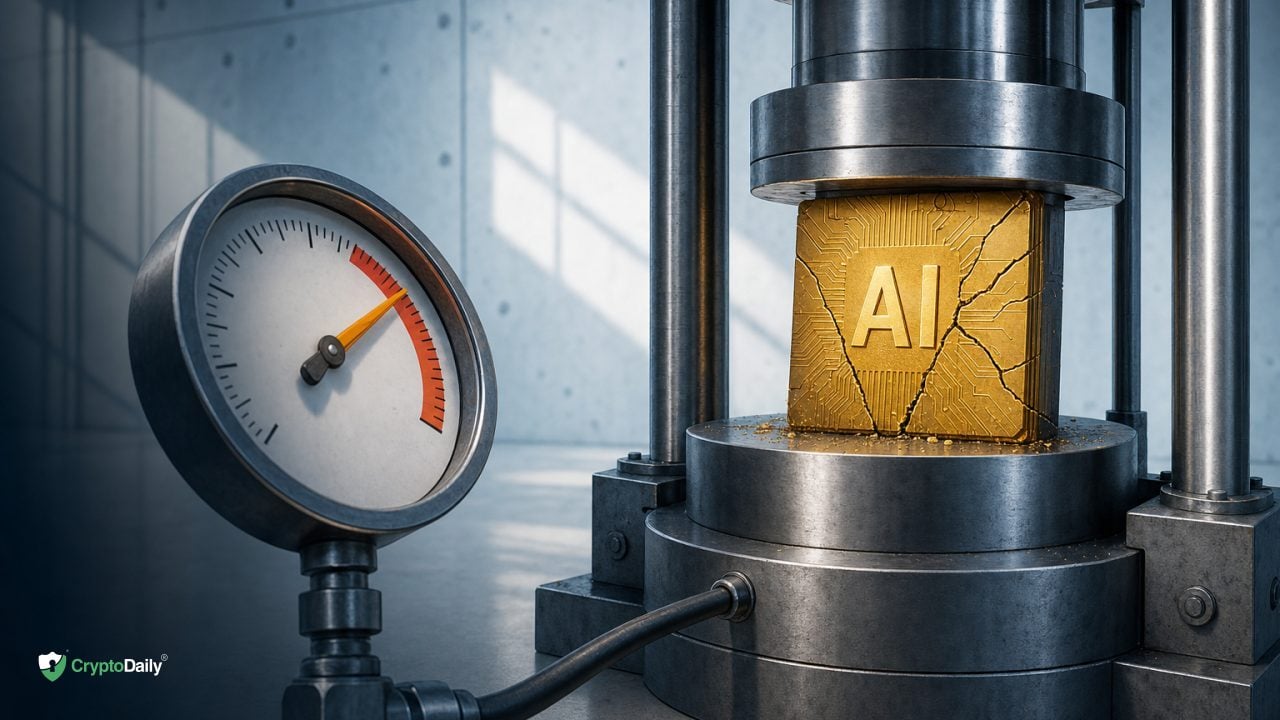
Palantir’s AI story has carried a premium for more than a year. Investors paid up for AIP momentum, sticky government work, and the promise that pilots would turn into real, repeatable revenue. Now the bill comes due. Earnings are around the corner, and the gap between narrative and numbers gets tested.
This isn’t a referendum on AI in general. It’s about whether one of the most marketed AI platforms can keep converting hype into contracts, margins, and cash. With options pricing a big swing, the market is basically saying: prove it.
Here’s what I’m watching and how I’d think through the setup without letting the AI buzz drown out the basics.
Point Details Earnings timing Q2 2026 results are slated for Monday, Aug. 3, after the close, per the company’s announcement (Nasdaq press release). Implied volatility signal Options were pricing roughly a 9.6% move around the print, and PLTR was trading near a 78.9x forward P/E with shares down about 22.6% over the last year (Investing.com). New enterprise motion Palantir and Rackspace launched an operating framework to deploy Foundry and AIP for regulated and sovereign customers, expanding distribution reach (GlobeNewswire/MarketScreener). Insider activity Director Alexander D. Moore disclosed selling 16,000 Class A shares on July 15 at prices including $133.7505 and $134.5549 per share (SEC Form 4). The bar to clear Evidence of durable commercial growth, improving unit economics, and clean GAAP profitability would go a long way toward defending the multiple.
Why this print matters for the AI trade
Palantir sits at the center of a bigger question: are AI platforms already priced like winners, or do they still have to earn it quarter to quarter? When a stock carries a high forward multiple and the prior year was negative for price, expectations get tight. The options market isn’t subtle about it either. A near double-digit implied move tells you positioning is not sleepy.
What changes sentiment quickly is not just revenue growth. It’s proof that AI deployments scale beyond pilots. Real usage. Renewals that expand. Lower onboarding costs per customer over time. All of that shows up in the mix and the margins.
Pro tip: Strip out the marketing terms on the call and write down three hard signals: new customers added, net retention or expansion behavior, and any proof that implementation times are shrinking. Those repeat across quarters and tell you more than adjectives do.
What the options market is pricing in
Traders have already marked this as a live event. Into the Aug. 3 date, options were implying about a 9.6% move in either direction, and the stock carried about a 78.9x forward P/E with a one-year drawdown near 22.6% going in (Investing.com). That combo is a neon sign for “narrow margin for error.”
If you trade around earnings, that backdrop usually punishes anything that looks like slower commercial momentum, soft guidance, or operating expense creep. The reverse is true too. Clean beats with confident guidance can trigger sharp squeezes when people came in hedged or underweight.
Context check: implied moves are not a forecast. They are simply the market’s best guess at how much the stock could swing to balance option prices. Reality can still blow past it.
Peeling back the premium
Valuation in context
There’s nothing wrong with a premium if it’s supported. The question is whether Palantir’s revenue growth, deal velocity, and margin structure justify it now, not two years from now. A rich multiple is a claim on future cash flows. For AI names, that claim rests on fewer pilots, more production rollouts, and usage that compounds over time.
Comparisons to other software vendors can get messy, but one constant applies. Investors reward a reliable pattern: new logos ramp, old logos expand, gross margins stay strong as onboarding becomes repeatable, and cash conversion holds without leaning too hard on stock-based comp.
Growth mix: government vs commercial
Palantir’s government roots are a strength for stability and a source of debate when people want faster commercial expansion. A durable AI premium probably needs commercial growth to carry more of the load. Not because government isn’t valuable, but because diversified demand across industries hardens the story and reduces single segment risk.
I’ll be watching how many net-new commercial customers join the roster, how quickly they reach meaningful spend, and whether high-profile pilots convert into standard deployments rather than one-offs.
Profit quality and cash
GAAP profitability matters. Cash flow matters. Stock-based compensation is not evil in itself, but perpetual heavy dilution erodes the benefit of growth. If Palantir can keep showing operating leverage while still investing in AIP adoption, that supports the premium. If leverage stalls while hiring and go-to-market expand, the market will likely make them prove more with guidance.
Indicator Stronger evidence of durable AI revenue Weaker evidence that risks a de-rate Customer additions More new logos plus rising average spend by cohort Few new logos, large one-offs drive most growth Implementation time Shorter deployment cycles quarter over quarter Flat or lengthening time to production Net retention Consistent expansion across industries Expansion narrowly tied to a handful of customers Margins Improving operating and free cash flow margins Flat margins with growing sales expense
Signals to watch Monday night
- Commercial customer adds and commentary on win rates for AIP. If implementation templates are working, they should be faster to ramp.
- Deal sizes and breadth. You want to hear about wins across highly regulated industries too, not only tech-forward clients.
- Backlog and remaining performance obligations. That’s the clearest window into near-term revenue durability.
- Operating leverage. Check whether revenue growth is outpacing opex growth without starving product or go-to-market.
- Guidance language. Watch for specificity rather than aspirational tone. Concrete ranges reduce ambiguity tax.
- Any color on sovereign and regulated deployments via partners, including timing and scale of rollouts.
Pro tip: Keep your own one-page scorecard. Mark each item green, yellow, or red as the call goes on. It keeps you from overreacting to one spicy line in the Q&A.
Partnerships and pipeline sanity check
Distribution is the untold story behind a lot of AI adoption. On July 9, Rackspace and Palantir announced a framework to deploy Foundry and AIP for regulated and sovereign enterprises. That’s a clear push to scale in harder-to-serve markets that care about data residency and compliance (GlobeNewswire/MarketScreener).
The big question is how quickly frameworks like this turn into revenue. On the call, listen for…